Showing posts with label Games. Show all posts

Thursday, May 9, 2013

Swashbucklers of the 7 Skies Review

This is a very different fantasy game. It has a very unique setting, magic system, and a rule system that encourages teamwork and detailed description. Pirates, swashbucklers, magic users, and explorers are main character themes. Lots of sword fighting and ship combat but it doesn't take place on the high seas but rather in the skies.

The setting is unique in that the world is sorta like a snow globe and emphasizes adventuring on skyships. The bottom layer is a mysterious blue liquid that objects and islands pass back and forth through but no person is known to have even come back from the other side. The very center of the word is a fire tornado that is nearly impossible to pass through but it can be done. The world has six layers of skies (seven including the bottom blue layer) with alternating directions of winds. Also each layer has six seasonal winds (seven including the fire center) with different flora, fauna, and obstacles for skyships to travel through. Within the sky are where precious materials for trading and selling can be found. Floating islands are suspended in each layer of sky shielded by a barrier clouds and fog. Skyships cannot float within this barrier and have to either dock on the edge of the islands or land in the water. From there skyships act like regular ships until they leave the barrier again.

There are seven major island nations each unique in culture and development. Trading and feuding between the nations is common so there will be a lot of travelling back and forth between some and trying to avoid ships from others. Pirate gangs also exist and are a powerful force themselves.

Each culture will give players a different Motivation in character creation and influence their rolls and character's drive. This really helps make people of different nationalities be unique. Another part of character creation is a foible, which is a character flaw. This is something to have fun with. While it may negatively effect a character it is rewarded when played out properly. Next is a Past quality giving each character a little bit of backstory that influences them in the present. Swashbuckling Forte is next and it's sorta like a character's super ability. What they're best at, a bit like a character class but not exactly.

Then each player gets five trait points. They can be attached to a quality to reduce their price but can only be used with that quality they're attached to. They influence the quality they're attached to for a bonus and help make using a quality a little different than last time for variations when used.

The core rule system is very neat and simple to use. It's a variation of the PDQ system called PDQ# Based on 2d6 for a regular challenge the player simply roles the dice, add any appropriate attributes, and tries to get over a target number. The harder the challenge the higher the target number. Another type of challenge is called a duel. Two opposing sides roles three dice (more if certain qualities give them bonus dice) to determine their attack and defense. If the defender wins they avoid the attack and get to attack next round and if they attacker wins they get to deal damage. Maneuvering, dodging, and and special moves also influence dice rolls. What I like about this system is it isn't just for physical combat. It works for mental, verbal, ships, magic, any time there's two people facing off head to head. Players get more bonuses for a challenge or duel if they can be descriptive enough to explain as to why a quality or trait helps them out each round. So players have to be toughtful in their moves and be engaging.

Ship maneuvering is a bit different though in that a captain gives each player a task as crew members and bonuses and dice are combined for the ship as a whole. This helps make each player feel like a team, each influencing their ship. Magic is called Gifts and is also different in that spell casting is open. Basically the GM determines the difficulty level for what magic spell the character is attempting to cast. It's a bit vague but basically the bigger or influential a spell the higher the difficulty. Kinda wish there was more details to actual spell casting but it isn't by no means unusable or broken.

Overall I think this is a great game with a cool setting and simple rules system. While the rules are light they cover enough to satisfy most players and don't bog down the high action and high adventure setting. It has plenty of examples and sample NPCs. While it doesn't have an index the table of contents at the beginning is laid out in such a way that it isn't necessary. If you're looking for a good pirate or swashbuckling game try this one out!

For more information about this game visit the publisher's website here.

Diaspora: Hard Science-Fiction Role-Playing with FATE Review


I will start off by saying that after reading this game it has a lot of great ideas but also some caveats when it comes to actual gameplay using the FATE rule system. The setting and concepts are awesome but I question the execution of the rules.

Getting started this is a space opera style game. Space ships, star systems, wormholes, distant planets, future tech, it's all here with the exception of aliens. This is meant to be a more realistic take on space travel, even if the physics behind wormholes being a reliable mode of transportation got a little fubbled for the sake of the game. I don't mind it. Humanity is branching out and spreading throughout the galaxy, settling on new planets in new star systems. The rules include how to easily make up your own planets and star systems with wormholes connecting them and it's very fun to play around with. Each planet and star system having different levels of social and technological development and amount of resources. I quite like it because it gives the game plenty of variations if the group wants to adventure someplace different. 

The game also includes rules for creating spaceships, spaceship combat, social combat, platoon combat, personal combat, and of course, character creation. Though this seems to be hit and miss.

Character creation is different than most other games. Based on Aspects, Skills, and Stunts. Aspects are like traits that describe what kind of person a character is. There are ten aspects a character can have either good or bad. When a FATE point is used with an aspect players get a bonus to a roll and can acquire more FATE points through playing out negative aspects. Aspects can also allow a player to do other things like create an NPC, or have a new social connection. Skills is what each character is good at. If a character is specialized at a trade or a job then the skills that character has should reflect that. There are plenty of skills to choose from, again this game offers a lot of variations. Stunts are special ways a character can get help in a tough situation. Improvise a skill, have new gear, or do something normally impossible.

After that this is when I start to have problems with the game. As mentioned above there's rules to do a lot of things and it seems there is plenty to do. But the rulebook doesn't give enough details or examples. It tells you all these cool rules but doesn't tell how to apply them. After some research this appears to be common with games using the FATE rules system. A recommendation is to read another game called "Spirit of the Century" as this is the first game using the FATE system and it has the most fleshed out details for it. While this does help a lot it bugs me that I have to read another game to better understand the rules on another because the writers skipped on the details. If Diaspora was meant to be setting supplement for SotC I wouldn't have an issue with that but it's not. It's supposed to be it's own game that just so happens to be using the same rule system. Even still rules for ship and platoon combat aren't included in the SotC rulebook.

This is a game I think that will have to be re-read a few times before it can be fully understood while also keeping the book handy while playing. But it's not because the rules a complex but because examples for how and when certain rules come into play were left out. I hope a revised version or a GM aide is released for Diaspora because it seems to be a great game at its core. I do highly recommend it for the concepts and I'm sure it can play out well once fully understood.

For more information about this game visit the publisher's website here.

Sunday, March 11, 2012

Ninja Burger: The RPG No Honor Edition Review

This is quick fun game with little prep time needed. Ninja Burger is considered to be a "beer & pretzels" game in that it' best played at a party and not to be taken seriously. There are a few previous editions of this game but in my opinion this one is probably the best. The 1st edition is almost impossible to find and the second edition had a more in-depth leveling system. Seeing as to how PCs get killed and screwed in funny ways, usually leaving only one survivor alive that can level up, it became a balance issue. Let's face it, the higher level would be more likely to win overtime. This one kinda went back to the game's roots. There is a skill advancement system but it's more balanced than the previous leveling system. You can pick the PDF of this edition up from RPGNow here for $4. The print version is no longer available. I don't know if they will ever enable the print-on-demand service at RPGNow but the book is so small you could print the PDF yourself if you prefer reading hard copies like me.

Based on the book "Ninja Burger", it's about modern day ninjas who feel their ninja skills are better utilized in the fast food industry. The demand for ninjas just isn't what it use to be and they gotta make a living somehow. Their motto is "Guaranteed delivery in 30 minutes or less or we commit Seppuku." These ninjas take their job very seriously and that's what adds to the humor. These ninjas go on epic, life threatening, harrowing quests just to deliver food. Facing traps, robots, pirates, samurais, evil ninjas, and whatever else that can be thrown at them. This game can be very creative once players get into it. Because the PCs are ninjas they have to be sneaky and methodical if they want to be successful. Sure they could bust in using their cool ninja weapons and ancient magic but that isn't ninja-like and a good way for a ninja to get killed. Character creation is simple and so are the magic and combat systems.

This game uses the PDQ (Prose Descriptive Qualities) rules system. I have played this system a couple times in the past with other RPGs. Personally, I don't care much for this system because I feel it's too light and loose but for this style of game I don't think they could've used a better rules system. You can get the bare bones PDQ rules for free here. Basically the player rolls 2 six-sided dice, apply a target number (the harder the task the higher this number, if the die result is equal to or greater than the target number the player succeeds. Also if a PC is skilled at the particular task, a bonus is added to the result depending on how skilled they are. This is essentially the entire system. It isn't bad and is inviting for non-gamers. Also for GMs who want a break from running the more serious games with in-depth rules may like this too. This is a game everyone can have fun with.

Sunday, March 4, 2012

The Mall of Doom Review

This review is for an adventure supplement for "The Mutant Epoch". I previously reviewed the RPG this adventure goes with here. This will not be a very in-depth review because if I go over too many details it will spoil the adventure for players. I will give my thoughts about it.  The adventure takes place in a small town. The townspeople ask the PCs to help investigate a string of suspicious kidnappings. This leads the PCs to an ancient shopping mall filled with monsters and sick horrors. This is a dark module and not recommended for young children if you're wanting to get them into gaming. I really liked it because it shows how desperately this world needs heroes.

Like "The Mutant Epoch" the art in this book is amazing and done by the author himself. Black and white art throughout and each picture matches the text to help describe what is going on. The cover is full-color and shows off some mutant PCs facing off against a horde of baddies. My copy has slightly smaller dimensions than the core rulebook. It isn't as tall or wide. In the top-right corner it says "Muli-Path Adventure Module". This is because it plays out like a "choose your own adventure book", giving the GM multiple logical options depending on the events the PCs triggered, or the direction the story is going in. This makes the adventure less likely to be ruined by the PCs taking a path that wasn't expected and keeps the adventure from becoming rail-roaded. Players aren't forced into only moving one direction.

Normally I'm not very fond of pre-made adventures because they're either too predictable or don't take into account of the players going in a different direction. This adventure could be played in multiple ways with multiple outcomes each time. This is also a tough challenge for players. The game recommends each player have two or three PCs rolled up. I think it would be wise to take their suggestion. I'm not going to get into specifics but this adventure is scary, brutal, and perfectly fits how the genre should be played. There's also one new weapon and creature that are very powerful. Of course there's some new pre-made NPCs and maps.

This is a great first supplement for "The Mutant Epoch" and I highly recommend this adventure. This is good for both novice and veteran GMs because of the ideas and tips it has in it. This is also good if you haven't had experience running a post-apocalypse game, or ran games that focus on combat rather than survival. This will challenge players mentally, putting them in bad situations and forcing them to think. You can order the print copy here and the PDF here.

Tuesday, February 28, 2012

The Mutant Epoch Review

I first discovered this game through tetsubo57's YouTube video review. I never had a mutant post-apocalypse RPG in my collection prior to this game. I sadly missed out on "Gamma World" and "After the Bomb" when they first came out, but I acquired them on the used market after I got "The Mutant Epoch" so I could have a better idea of the genre. From my reading, "The Mutant Epoch" takes a lot of the ideas from previous post-apocalypse RPGs and puts them in a modern and more complete rule system with its own flair added in.

The physical book is 244 pages so it covers a lot of rules and information that rules-lite games can skip out on. The author is also the publisher and illustrator. This is his own game and vision all the way. I really liked the artwork. There's black and white illustrations that go with the text on every page. The cover is full-color and shows off some of the character types that can be played. I know the author also sells graphic designs and he is a very talented artist. This book is better than what some companies with large development teams can do. If you're the type of person who likes visual aids you will appreciate the artwork in this book.

For those who don't know, post-apocalypse settings take place in the far future after society has collapsed. For whatever reason be it radiation, genetic engineering, evolution, etc. large populations of lifeforms on the planet are mutated. This is of course sci-fi and science fantasy and not grounded on real science. There are a variety of mutants and mutations in this setting. Most towns are small, independent, fortresses, who are fearful of horrid mutants. Buildings of today are the ancient relics in this setting. Humans own most of these towns and won't let just anybody in. This is because pure humans have inherited wealth but are severely under-powered compared to the other character types. Pure humans also see themselves as nobles and the creators of some of the other types so they're just jerks to everybody else. Because of the society collapse the world is ran like the dark age feudal system rampant with prejudices.

Pure stock humans are rare and of the highest social caste. Some of the other character types were created by humans to be slaves and servants. Bioreplicants are synthetic humans that are very similar to humans but utilize the human body more efficiently for specific tasks. Bioreplicants are engineered by machines without family and grow up in a life of servitude. Clones are also similar to humans but unlike bioreplicants, they're just copies of humans and not created from scratch through genetic engineering. Clones blend in human societies better than the other non-humans but were still raised to be servants. Trans-humans are evolved humans. Trans-humans are flawless and regard themselves as the best at everything. Though human-like they don't blend in human society very well because of their claimed superiority over humans. Cyborgs are humans with technological implants to overcome human limitations. Cyborgs were designed to do specific tasks for their masters. Man meets machine. Cyborgs can be extremely powerful if fitted with combat implants. Ghost mutants are mutants that appear human. Ghost mutants are not as powerful as the other mutants but they usually have various psionics and immunity powers. Ghost mutants blend in human society better than other mutants but because they're mutants they tend to sympathize for the mutants who are cast out of society. Mutants are the most common type in the world. They vary from degrees of mutations. The more mutations the more powerful they are but the more they stick out to humans. Mutants can be a real powerhouse even with a couple flawed mutations and the most fun to play with. Bestial humans are anthropomorphic animals. They're the result of genetic engineering that was done on animals and became their own species. They have different natural abilities depending on the species of animal they derived from. Also depending on the species bestial humans may or may not be socially accepted. Spider people are more feared than dog people. Cow people are at high risk of being eaten. Having human or human looking companions will help some bestial humans gain access to human towns.

The core mechanic is a "roll under" d100 percentile system, which is an improvement in my opinion over the AD&D system in "Gamma World" and the Megaversal system in "After the Bomb". I know it's probably a bad idea to compare these games against each other in a review, so I'm not gonna dwell on it. If you're curious how a d100 system works just look at my previous reviews where I explain that mechanic in more detail. This is it's own system, while it is a d100 core mechanic, character creation, combat, and character advancement work differently than in the BRP system. D100 systems are my favorite because they're robust and simple to use, so I have no complaints. When skills are being tested dice rolls are compared against a hazard table. I wasn't a fan of that at first because I didn't think it was streamlined but it is a good tool for GMs. They can adjust the difficulty so stronger players are challenged without making tasks too difficult. My impression of it is that it will make a good balancing tool, which a game like this needs because players can vary drastically in power.

What really stands out about this game and is probably the most talked about is the character creation rules. A mutant post-apocalyptic setting probably has the most diverse characters interacting with each other and this system reflects that. Although there's a point buy alternative, the core is random and I like that much better because I like the diversity it generates. If every player had their way the would try to create the perfect character archetype they want to play but that isn't realistic especially for a setting like this. The teams will be made up of ragtag misfits with flaws and broken backgrounds. Everything from the character type, caste, job, skills, mutant abilities, cyborg implants, starting gear, age, even which hand is dominant is covered in the character creation system. You can walk in without any idea at all, roll against the random charts, and have a complete fleshed out character. This can almost be considered a game in and of itself. Just know that this is a dark future and there's a high chance your character will have a troubled past. Slave, poor farmer, prostitute, criminal. You're not likely to be a super soldier or wealthy scientist.

There's a list of mutant powers, cyborg implants, and mutant creatures and they're perhaps the most coolest things I have ever read in a RPG. There's almost everything that can be thought up. All are useful, most have variations, and all detailed with rules on how to use them. They include by not limited to acid blood, beam eyes, bladed limbs, claws, electric pulse, multiple limbs, multiple heads, spikes, ballistic-proof skin, tentacles, climbing suckers, night vision. There's a lot. Same with cyborg implants. Alloy razor claws, armor, force fields, communication implants, hydraulic legs, power arm, pincers, built-in computers, optic enhancements, air filters, hidden lasers and guns. There is so much more. The mutant creatures mostly consists of animals, plants, and insects that have been genetically modified to be giants that are intelligent, multi-headed, multi-clawed, with stingers and fangs. Some creatures are humanoids that were genetically engineered for war. This is also where the artwork I mentioned before really came through for me. Just about everything listed has a picture to visually give you ideas. Even frogs want you dead in this game.

The combat system is interesting. If a character can make multiple attacks in a single round they can make multiple attacks like normal or combine them into one all-out powerful attack for that round. There's a greater risk of missing because it's only one attack but with a higher damage potential. I also like how all the dice are used for damage so every die gets used, even d20s. Even though it's a d100 system, I find the full dice spectrum gets used more than in other d100 systems. When attacking the result (Strike value or SV) is compared against the targets defense value (DV), which is a combination of the targets armor and evading abilities. If the SV succeeds the DV then damage dice are rolled. The amount of damage one can take is determined by their endurance. If the damage taken succeeds their endurance they're unconscious or possibly slowly taking more damage from dying. How much negative damage that can be taken before death depends on their willpower and if the character also took some non-lethal stun damage.

The items and weapons in this game are both modern day and futuristic. Ammunition and power packs are precious resources like food and water. A lot of melee weapons and armor are improvised mundane items, which I thought was neat and makes sense for the setting. Aside from regular guns like we have today there are some that feed multiple types of ammo, improved high-caliber ammo, and laser weapons, showing that the weapon technology has continued to improve since our time. There's also lost futuristic technology and survival gear. High-tech computer systems are considered precious relics and luxury items. Also most mutants, bestial humans, and cyborg have natural or built-in weapons and armor as well. Even if unequipped they'll still have a way to fight and block attacks.

There is just so much sci-fi goodness in this book. Robots, androids, vehicles, you name it. The androids also have their own caste systems depending on the model and job assignment is was designed for. They're extremely powerful enemies if being utilized for combat. They aren't playable characters yet but I think that's OK. The game isn't really meant to be played as machines or mutant plants like in Gamma World but I can see why people would like to play them. The author did say rules to play those character types may be included in future supplements. There's already quite a bit of supplement material for this book. If you use the passcode on the inside cover you'll get access to free PDFs by the author for extra creatures, NPCs, items, optional rules, and GM tools. There's a monthly magazine that you can subscribe to that has more cool things in them as well. There's also an adventure supplement called "The Mall of Doom" which I will post a short follow-up review on because I don't want to ruin the adventure.

The Mutant Epoch can be picked up on Amazon, Lulu, and RPGNow. The website for the company can also be found here This is probably the best in-print RPG in the mutated far future, post-apocalypse genre and maybe even the best in the genre of all time. The setting, rules, creatures, technology, and characters are all things I like and I know a lot of people like this stuff too.

Saturday, August 20, 2011

Delta Green Intro

I'm going to try to give an overview of this setting the best I can without spoiling the setting for players and GMs. This uses the same classic Call of Cthulhu RPG system that we already know and love. It is also D20 compatible if you prefer the D20 version of CoC. Delta Green is a secret government unit that technically doesn't exist. DG is usually referred to X-Files for Cthulhu and on the surface that wouldn't be a bad comparison but this goes deeper and more specific than X-Files. Rather than just investigating cases of paranormal activity, DG is only interested in cases directly related to the mythos. Cults, gods, Necronomicon spells, summonings, the Mi-Go, etc. Not just random UFO, ghost, or Bigfoot sightings (unless you somehow link them to the mythos).

The setting helps give a reason why the characters are together and are obligated to investigate. They aren't just nosey neighbors, they're agents and it's their job. It's more modern so players can relate more to the setting but it may give them a false sense of security. Just because the agents are more readily armed with guns they're still weak compared to the gods and monsters. Also because DG technically doesn't exist they aren't very likely to receive help from other agencies. Still, being agents they're obligated to uphold the law. This could be different for players use to playing carefree thugs. That won't go over so well here. Everyone has to do some in-depth planning before each move.

The beauty is how the setting ties in out modern world with the cases and weaves all the cases together into a complex web. Each story is attached to one huge meta-plot but it's not annoying about it as some setting can be. It's hard to explain but when playing the game you can tell they're bigger powers at work, you just don't know what. It being in our modern world it does hit some controversial subjects. Nazis, 9/11, wars, Project Rainbow, Roswell, and in later supplements Katrina. It handles these subjects maturely and appropriately for the game setting. Cults have also modernized. They aren't screaming cannibals or cloaked serial killers. They blend in more. They're "the man". An evil force trying to control everything through their gods..

I initially wanted to go in-depth like I usually go in my reviews but I really hate to for this. It would ruin the game for so many people and I feel everyone should play it at least once. I think just giving a brief overview of the Delta Green agency and what the setting includes is enough. The secrets should only be revealed as the game is being played. :)

More information about this setting and purchasing books can be found out at the publisher, Pagan Publishing's website here. Though I should mention that the books can be hard to come by. Pagan Publishing is a small publisher and the books are usually in high demand. I think the limited quantities help keep the setting special for die hard fans.

Polaris: Chivalric Tragedy at Utmost North‎ Review

This game is really different from most. Some people are even afraid to try it. The setting is awesome, the concept is neat, but there's a glaring difference from tradition RPGs. It's GM-less. I kinda argue that it's not and I'll explain later on. A major downside is it's pretty much 4 players only. It could work with 3 or 5 and probably be very successful that way but it was made with 4 players in mind. Don't have 4 players then you've already got a hurdle to jump over to set this game up.

First off the writing in the book is as if a noble from Polaris wrote it. At least that's my impression. Very artsy and romantic. This could bug some people and I can see where they're coming from but Polaris is a high-class society. I do think this was the author's goal. From that perspective the writing could help set the mood for the setting. Polaris itself was a city "on top of the world", in every meaning of the phrase. At the north pole the people only knew of night. They mapped and named the stars. Wrote stories about them and sang songs in their city made of ice. Then one day the sun comes bringing light and heat, followed by the moon. A series of events happen that make the royal family gets corrupt. They don't know how to react to what's going on. Bad behavior and bad decisions start being made by everyone. Most people are too self-involved to even care. Suddenly a giant pit to hell opens up in the middle of the city called the "mistake" and demons called the "mistaken" come out. Worse just got worser. The only people who care to do anything are the knights.

That's where the players come in. Each play the role of a knight but they take on 3 other roles as well.
Heart- The knight. Traditional PC role.
Mistaken- The demon and antagonist of the heart. Traditional GM role with the exception of NPCs.
Full Moon- Social and Hierarchical characters associated with the heart as well as minor male characters.
New Moon- Personal and emotional characters associated with the heart as well as minor female characters.

These roles rotate with the 4 players around a table. Because of this Polaris is not so much GM-less but that the role of the GM is rotated and shared among the group. 4 different hearts and mistaken and 4 different stories for each. If you wanted something completely different you could be disappointed, if you wanted something traditional in Polaris to recognize this could be a good thing. I think it's a fair median.

Each knight has 4 characteristics and 4 values. The first characteristic is Abilities which is what the knight is trained for or knowledgeable in. Blessings are magical, sacred, or useful items in the knight's inventory. Next is Fate which are significant events and people (not controlled by the Moons) in the knight's past. Last is Office which are titles or social ranks the knight has.

The first value is Ice. Ice is how much compassion the knight has for the world around him when fighting the mistaken to protect others. Light is how well the knight can fight the mistaken on a 1 on 1 basis. Ice and Light start at 1 and improve as the knight progresses. Zeal is the knights drive to save the world. This starts at 4 and goes down as the game progresses. Weariness starts adding up when Zeal reaches 0. This is the knights sorrow and frustration to continue fighting. Each knight will lose. That's another thing that could drive people away from this game. It's not about winning, it's about losing on an epic and poetic scale. It is a "Chivalric Tragedy" after all.

The core mechanic is a bit strange. PCs perform actions by saying key phrases. The heart and the mistaken debate and bargain for what happens next. It's essentially just story telling within the game system. If an aspect is used it gets checked off and must be refreshed to be used again. When a resolution can't be found using just key phrases the die come out. It is rolled. If it's to save others then the result must be lower than Ice to be a success. If it's to save the knight then it must be lower than Light. If higher than the appropriate score then the Knight loses the conflict, but gets an experience roll. The result is compared with Zeal or Weariness. If successful Ice or Light go up a point but Zeal goes down. If the rolled failed then just aspects get refreshed. The more experienced a knight gets the more corrupt they become.

The rest of the book is made up of appendixes. Variant rules, example aspects (highly recommended), examples of playing the game (also highly recommended), and stars. Because the night sky was a major focus to the setting knowing the constellations, stars, and their meanings is very helpful when talking to people, or finding some strange item or symbol.

As I said before this game is fun but not for everyone. It could be useful if a player isn't use to GMing and would like a shot but if more people aren't use to GMing the game could get bogged down. It's interesting and could be a good side-game. There's not a lot of number crunching involved so it has that going for it. The writing and the art are both provocative of the setting. In fact if you get this just for the setting you won't be disappointed. I haven't played this as much as I would like but I'm glad I own it. The game can be purchased here. You can even choose your own price!

Friday, August 19, 2011

Barbarians of Lemuria (Legendary Edition) Review

This is an indie game that has a decent size following. It's most appealing aspects are its setting, magic system and career system. Not that those are the only things to like about it but they're what sets it apart from most systems. This isn't a typical fantasy game however. This is geared towards a "swords and sorcery" style of play. Magic is less refined. Civilization is very basic. Monsters are mostly giant reptiles and birds. Mammals are sparse in Lemuria, including horses. The characters are more heroic because of who they are rather than the events they get involved in. The setting itself is less "romantic" than your typical high fantasy setting. The setting it comes with does give a hint of sci-fi because the world is set way after an apocalypse. So there maybe some ancient technology from the past the that people now wouldn't understand. The setting it comes with can come off as bland but that's the point. It's just to start you off and the group builds onto it.

For it being a small book at 110 pages it really is a full game that could last at least a few sessions. So if you're wanting a quick simple game that requires less dedication this would most likely work for you. It's a throwback to the old style where games had simple systems that were unique for each game, whereas today most games use a standard rules system like D20, Savage Worlds, BRP and so on. So yes you'll have to learn a new system but it's not a big deal to pick up because it's so easy.

Character creation is simple. Each character has four attributes. Strength, agility, mind, and appeal. Each player has 4 points to put into them. None can be higher than 3 and one can be dropped to a -1 to raise another by one point. Don't worry about having a 0 score in something. It doesn't mean you suck in that attribute it just means you're average. So overall each character is going to be above average in someways. Going along the lines of how bad-ass characters are in a s&s setting. Next are abilities. Brawl, melee, ranged and defense. Same rules as attributes so no surprises here. Characteristics are determined by what each player wants. Later in character creation careers, boons, and flaws can impact these so don't worry too much. Just put some notes how you want your character to be. Lifeblood is character health. It starts at 10 for everyone and increases a point for each point in strength. If it drops to 0 that doesn't mean dead, it just means unconscious. Don't let it fall in the negatives though or your character will eventually die.

Careers is where you add some back story to your stat block of a character. Think of them almost like classes if that helps but they are different. Each person chooses 4 and they act as skill sets. A barbarian career is going to give that character the knowledge of how to fight, hunt, and survive but they won't get anything in crafting, reading, or social. A noble career would be helpful in social gatherings, getting money, and maybe even playing politics if needed. There's 26 careers to choose from and players and GM could make up your own. When four are chosen put points in them just like the rules with attributes but a career can't have fewer points than 0. After careers are determined then characters origins, boons, and flaws are determined. Boons are positive bonuses and flaws are hindrances. They can be physical or psychological. When they come into play roll 3d6. For a boon drop the lowest, and a flaw drop the highest. So it's much easier or harder to succeed or fail. In the rules these are determined by where your character came from but they don't have to be. They're just a general guideline to go with.

The system is easy. Right out of the book it says
• Roll 2d6
• Add the relevant attribute
• Add any relevant combat abilities (if fighting)
• Add any relevant career (if not fighting)
• Add any modifiers
If the result equals or exceeds 9, your character succeeds. If the result is lower than 9, you fail.
A natural 12 (i.e. two sixes) on the dice is always a success.
A natural 2 (i.e. two ones) on the dice is always a failure.

Remember the target number for a success is 9. Depending on the difficulty of a roll a negative modifier could be given by the GM. So if a dice roll resulted in a 9 but a -2 modifier were applied it would still be a failure. This is where using boosts from careers, attributes, abilities, and boons come in handy so overcoming a negative modifier is easier. Combat is simple and fast. "Rabble" are just filler enemies that only take a hit to defeat. NPCs and villains are treated more like regular characters though NPCs are weaker. There are optional combat moves to keep it fresh. Weapons give a bonus modifier to attacks and range. Armor absorbs damage your character takes if hit but reduces agility so they can't doge as well. Nothing wrong with how things work, no surprises. Overall, simple and fluid. Lots of action can take place so it's not vanilla each time which can sometimes happen in a simple system. Also if a failure happens, depending on how bad it is, a GM can have some fun. It might be more fun to put a PC in an awkward and frightening situation rather than just killing them.

Characters can also get hero points for helping out, player gives a good story idea, or solving some puzzle. They're used to increase the power behind a success or lessen the effect of a failure. They can also be used to re-roll, lessen the damage of a wound, defy death, and so on. Something good will always happen in a characters favor as long as it's not too crazy. If a player is asking for a bit much I suggest raising the price of whatever it is they're asking for (2 or 3 points instead of just 1) rather than saying flat out no. GMs and players should be reasonable. Use these wisely but do use them. The game is much better that way.

When a quest is completed characters are rewarded with loot. The more creative and fun the loot is spent the better. Sure it could be spent on supplies but it's a good idea to party like heroes. After all supplies in the book don't have prices so it's vague how much they cost. If the party is good with the locals they'll be thankful and give them supplies in hopes they may help them out more. They better loot is spent the more advancement points characters are rewarded. These can be used to boost attributes, abilities, careers, boons, or drop a flaw, etc. Again anything good that will benefit a character as they grow.

Magic is really cool. It's an open magic system. Rather than casting spells from a book and expecting the same results, magic is random and ritualistic. Anyone with the magic career gets 10 magic points. The bigger the spell is (rated in magnitudes) the more magic points the spell will require. To reduce the requirements a ritual of some sort must be done. This can be gathering sacred stones, herbs, carving runes, fasting, self mutilation, up to animal and human sacrifice. The higher magnitude a spell the more extreme the requirements. Also the higher magnitude a spell is the harder it is to reach the target number of 9 because the caster will suffer a higher negative penalty on their roll. I like this because it's more creative and contrary to people saying it takes longer than just casting a spell, in practice it's not. It's quicker than what you would think.

There's a lot more to this game but these are the basics. I really enjoy this game because it gives a much different feeling than the average fantasy setting and system does. I like how it's a throwback without being as weird as some games from back then could be. It can be bought here (PDF), here (print), and free resources, including a free older version can be found here.

Saturday, February 12, 2011

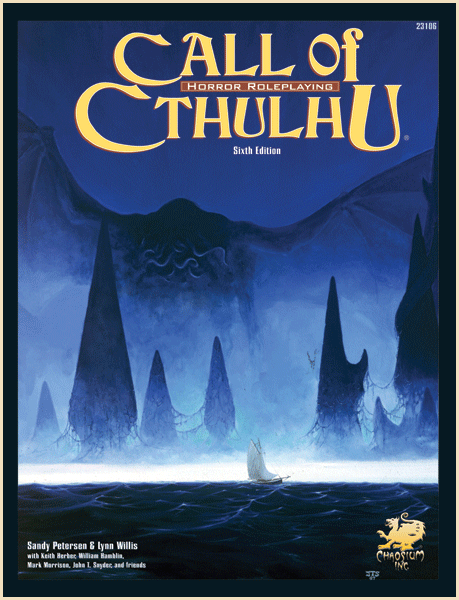
The Call of Cthulhu Short Review & Thoughts

Call of Cthulhu is a RPG that's been around since the early times of tabletop gaming. Released in 1981 by Chaosium using their BRP D100 rules system. I briefly covered BRP in my OpenQuest review but CoC uses the full version of BRP. If you're unfamiliar with BRP I recommend checking out my OpenQuest review here. The skills and careers are based during the 1930's era but can be played during almost any time period. GMs are called Keeper of Forbidden Knowledge and players are Investigators. The appeal of CoC isn't really the rules but more for the setting although I think the rules go well with the setting.

Full BRP is slightly different than OpenQuest. The major differences are character creation and advancement. First players roll dice to determine their attributes. Characters choose a profession to determine what skills they start off with. Think of them sorta like a template for the type of character you wanna play. You can start from scratch I suppose but this might cause some balance issues between characters and slow things down. To advance skills players check off skills they've use. After a session players roll D100. If they roll higher than their current skill percentage the skill goes up. So the more players use skills the higher they advance and the harder they are to advance later on. There are more detailed difference but these are the biggest two.

Based on the writings of H.P. Lovecraft the Cthulhu mythos is a sci-fi horror setting. Ancient alien gods are worshiped by cultist. The gods don't care about humanity but are intertwined and play with humans like toys. This is a very dark and grim setting where it's very easy to die if players aren't careful. The players play as investigators who have some ties with the town and go snooping the weirdness going on. The games usually start off being subtle and evolving more evil as they go on. Characters have a sanity score and the more they know about the mythos they have to roll to keep their sanity. If they fail they'll lose sanity. As characters lose sanity the players start to lose control of their actions by gaining phobias and mental illnesses. Eventually going completely insane and become controlled by the Keeper. This game has a ton of support from Chaosium with several supplements and modules. Currently in the 6th edition but I think technically it's in it's 9th. Because CoC uses BRP little has changed through the decades with the rules. Each edition is more like a reprinting with some slight changes to refine the setting. A supplement from the 80's will work just as good presently.

CoC isn't a game I play as often as I'd like. I love the setting and making adventures but it requires participation from the players. More so than most RPGs. If players are too active they will get into danger and die. Too reserved and they don't get into enough trouble to go deeper in the mythos. This game requires a sweet spot that is hard to meet for most of my groups. I think it has to do with the setting. In Lovecraft stories the characters weren't aware they were in a horror story. They acted just as they would normally any other day. They knew something weird was going on but they didn't expect monster worshiping cults. In the RPG everyone is aware they're in a horror story. Players need to be good at separating what they know with what they're characters know. In a few play troughs it gets better but it's something to be aware of. There is setting for CoC that sorta helps resolve this called Delta Green. Although still a horror game I find it's easier for players to get into that "sweet spot" and there's more mystery. Players aren't as aware of what to expect. I plan on review Delta Green is going to be a future post so check back later. :)

Friday, February 11, 2011

The Supercrew Review

Sorry for the lack of steady updates. Things should get back on schedule around here and I'll update more often. This next game brings together 2 of my favorite hobbies, Comics and RPGs. The Supercrew is a fun light game that gives the feeling of a comic book or Saturday morning cartoons. It's been around for years and originally written in Sweden. It really hasn't gotten the praise it deserves. Most supers games have some rules I personally don't find appealing for the superheroes genre. Either too constrained or handle different powers too funky especially in long-term play. The Supercrew doesn't have this problem. It's designed to look and play like a comic. Only 28 pages long making it small to pack around. The rules are presented in full color comic book format that's funny to read and each session plays out as a issue.

The Supercrew is different because there isn't a list of powers. Players can have any 3 powers they can think up but they have to categorize and prioritize them. There's 6 categories (Attribute, Super Powers, Attack, Equipment, Control, Skill). All a player has to do is roll a 6 sided die 3 times and design their character's 3 powers around them. If a player wants to they can choose which 3 categories they want but I think it's more fun to have a random aspect. Creation is already free form enough so a little design challenge is better for game play. Players can't get everything they want and create a perfect combination of powers to make an already simple game too easy. That's just me. Categorizing powers is straightforward and done in grades. Grade 3 is a power that is very effective but can only used by spending a hero point. Grade 2 is the average and most used power for the character. Grade 1 is the weakest power but when used gives a hero point which unlocks more uses for grade 3 powers. Along with 3 powers each character gets 3 tricks. Each trick is connected to a power. They are basically an alternate way that power can be used. They can be used if a player gets a bad roll and wants to change the result. A trick can only be used anytime in game but their dice changing benefit can only be used once per session.

The resolution rules are similar to d6 but without the dice pools. The amount of dice rolled depends on the grade of the ability being used. So between 1 to 3 dice. 4,5,6's are successes. 6's give a bonus dice. The successes are totaled up to give what is called an effect. Any obstacle whether it be villains or a disaster is given a toughness level for the amount of effect needed to neutralize them. All obstacles are treated like players but depending on the difficulty can be given more hit point, abilities, and tricks. So to keep the game from being too easy all a GM has to do is increase the toughness. Players can in a pinch use their powers together to combine the total dice they can roll. This encourages the teamwork that superhero teams are famous for. All rolls are done before the scene. The highest effects go first and the lowest effects go last. When receiving damage a player can either roll a single reflex dice or make a more powerful defense roll. When making a defense roll a player uses an ability to defend themselves but can't attack later. Players only have a maximum damage of 3 but can't die. They're just knocked out for the scene. After each scene all players get their hit points back and fallen heroes get a hero point for taking one for the team. That's one of the benefits of being a superhero.

Players can change the story quite a bit in this RPG. This gives their heroes a more larger feel and makes it feel like everyone is collaborating in writing a comic book issue. If an ability isn't used dice aren't rolled. If dice are rolled the players get to describe how their ability was used used even if they fail. Players each session can use an anecdote. This lets players make-up a entire scene to help conquer a obstacle. They have to be relevant and creative though.

This is a great light supers game. You can get a free expansion to give long-term advancement rules that I highly recommend getting if you plan on playing more than one-shots. You can get The Supercrew in comic book and PDF download through Lulu. It's really cheap and well worth the money. Because of it's narrative and rule-light design it's my favorite superheroes RPG I own. The only rules light supers RPGs that might hold up to this is either B.A.S.H. or Truth & Justice but admittedly I don't own either one. The Supercrew has filled my superheroes RPG void but if I get a chance to play either of those I will.

Tuesday, February 1, 2011

OpenQuest Review

I played OpenQuest up until I started my BW and BE games. Even before I got a hold of the final version of OQ I played the free version for over a year and it's derivatives even longer. OQ is in a nutshell a simplified and streamlined retro-clone of RuneQuest. Basic Role-Playing, RuneQuest (any version), Stormbringer, Call of Cthulhu, Elfquest, Ringworld, Pendragon, and a few other games all use basically the same D100 percentile dice mechanic called BRP. I've played these games a lot prior to OQ and when it comes to playing BRP in a fantasy setting I think OQ is the best because of it's simplicity. OpenQuest is published by D101 Games. The book is 188 pages long with black & white artwork throughout. The cover is very eye catching as you can see up top. The presentation is great. It has a index but the table of contents is easier to use for looking things up in my opinion. Though you won't be needing to refer to the book a whole lot in play it's nice that if it were to be needed quick research can be done.

D100 is simple enough already. You roll 2 ten-sided dice. One is tens place (00-90) and the other is ones (0-9) and you try to get a result under your skill level. The lower the result the better. So if you have a skill of 80% you just gotta get under 80. A skill at 30% means you gotta get under 30 and that's harder to do. 1's (00 on tens and 1 one ones) are critical successes and 100's (00 on tens and 0 or ones) are fumbles. In d100 the result of the tens die tends to be the most important result. The ones is just if you're barley on the edge, opposing sides got a tied result, and to determine if you got a critical or fumble. In OpenQuest there are modifiers but you don't have to keep up with a bunch of little ones. All modifiers are either +/-25% or +/-50% with the exception of some spells that are +/-10%. This gets rid of a lot of micromanagement that plagues RPGs and can sometimes be a hassle in percentiles.

Character creation is simple but different than RuneQuest. Gone are lifepaths. I don't know if this was done for simplicity or because of the way skills are laid out. Maybe both. It's a good different alternative from what is common in BRP. Each character has starting characteristics. There's eight characteristics each with a base point value of 8. Strength, constitution, dexterity, size, intelligence, power, and charisma. Players have 30 points to spend on them. All have a maximum value of 18 for humans. Characteristics can be reduced lower than 8 for some additional spending points but have set minimum values. If a player has a concept in mind this is the best method. There's a dice rolling method too if a player wants to go completely random. Attributes are second values that are directly effected by characteristics. Damage modifier, hit points, major wound level, magic points, and movement rate. There are different character creation rules if a player wants to play a non-human. It's very easy to use any non-human as a player character. From the common elves and dwarves to monsters. I played a game where the players were in a orc war-band. 2 were orcs, 1 goblin, and the other 2 were different types of undead. It's a simple and robust system.

Skills are also different than other d100 games. The skills are more broad to again cut-down on micromanagement. This is classless game but the skills are almost like career fields. This makes the characters feel more experienced and like they took an actual trade rather than picking up random skills. I like this approach because it's still more robust than classes but less hassle dealing with specific skills. When a skill is raised it's raised in increments of 5% to cut down on math and for simplify. It would be very easy to add your own skills if something you want can't be used with the skills given. I think this modification to skills is what lead to most of the major mechanical differences from RQ/BRP.

Magic is different if you're not familiar with RQ. Magic is open to everybody. Now that's easy to change if you don't want that but it was this way in RQ and it's that way in OQ. It's not bad though. It's common magic and it's fairly simple stuff. A character with just common magic isn't going to be a spell slinging wizard. It makes sense though. In the real world anybody can be a fighter but unless you specialize in fighting you're not gonna be better than average. In OQ there's Sorcery and Divine magic. These are the specialized magic fields and where more powerful spells are but they have more requirements to meet. Shamanism and the spirit combat rules to go with Shamanism are also included. So there's a lot of variety in this game when it comes to fantasy magic all using the simple and robust OQ philosophy. Keeping up in RQ tradition is the influence of religions and cults. Different gods and practices give different skills, spells, and special abilities but also require their followers to do things to appease them. Cults are more influential on Divine magic but they effect the social views of all characters and the setting one way or another.

Combat is fast and gritty. Players have a list of different combat actions. Defense, close, ranged, and unarmed all have a set of actions. When fighting the opposing sides roll. The one with the lowest roll wins and is successful with their action. If taking a defensive action the offensive attack is avoided. If taking offense they roll damage dice according to their weapon and the if the opposition is wearing armor a fixed value is subtracted from the damage. OQ uses a fixed hit points system as opposed to hit locations like most BRP games. If a character receives damage that is more than 1/2 of their original hit points in one hit the victim has to roll for a critical wound which will be nasty. Mangled limbs, loss of a limb, brain damage, eye torn out, and broken bones. These are like the Stormbringer 5th edition rules and fit right in with the simple minimal counting approach of OQ. I really liked this change and it made combat brutal without being a chore like how hit locations can be. Fantasy settings tend have a lot of fighting but in OQ it shouldn't be the only option characters have to solve a problem.

Improving a character in OQ may seem a bit slow than other RPGs but keep in mind characters start out being proficient to begin with. This might just be my opinion because BRP games never really focused on maxing characters out so much they essentially just become stat blocks with no personality or drive. There's similar rules in OQ like the previous mentioned Burning Wheel called motives. These are different than beliefs but their purpose is the same overall. To give the characters goals to accomplish and to be rewarded for them. It's a different improvement method than most BRP games but just as effective. It's more story-driven in OQ and I think that was the author's intent. Players can practice skills outside of questing to speed improvement up. There's also hero points which allow the player to change the situation they're in through plot editing. 

There's more rules for ships, mental damage, travelling, mounts, objects, healing, poisons, disease, encumbrance, suffocation, thirst and starvation, falling, illumination, and burning to death. These are all towards the back and are only needed when the situation comes up. They're all simple to apply and can make a situation more interesting in gameplay. In the back is also the monster list and the information needed to use them as characters. There's also ways to figure up random items or treasure they will have if defeated. There's about 40 in total (counting the elemental separately) and an animal list with another 25. So the selection is really good and making your own creatures here won't be a problem. (I'm glad to see the Durulz from Glorantha here ;)

There's a pre-made setting called the Empire of Gantan. It's a cool base for a setting that GMs can build on. It's like a fantasy Byzantine empire. Religion, conquest, politics, combined with magic and monsters. It's clearly inspired by Gloarantha and I think it's purpose was to make OpenQuest easier to tie in with that setting or to be built on by GMs. It comes with some sample adventures to show off the system and to give a feel of the setting. Not bad for starting out if you're just trying this game out from scratch or need some quick ideas.

You can get OQ at http://d101games.co.uk/books/openquest/. The publisher uses Lulu print on demand so if you order it will take about a week longer than most orders because of the time needed for Lulu to get around printing and binding. OpenQuest is a simple and robust game out-of-the-box but easy enough to customize and add in your own stuff. It's very easy to add RuneQuest and BRP rules if something from them fits your campaign better. This goes along great in the family of D100 games because of it's different twists on the system.

Thursday, January 27, 2011

Burning Empires Review

In my last review I covered Burning Wheel, the tabletop game that Burning Empires derived from. I am currently in a game of this and have GMed two sessions so far. The type of game play is basically the same but in a broader scope. The characters become more like stuff of legend over coming very tragic downfalls and short comings. This will be long but I will try to be brief on some parts mostly just covering what is different. Of course there's guns, ships, vehicles, aliens, armor, and tech so I'm not gonna cover it all but rather how it works in Burning Empires. There's a lot to cover in this book so the standard stuff you'll expect in a sci-fi game I will skim over.


First off it's a full-color hardback with a eye-catching wraparound cover. It's 656 pages long but it has both core rules and character burner combined. Throughout is artwork taken from the source material and custom sketches. Great table of contents, sidebars, headings, tabs, and index which are a must for a game like this. It's a big book with lots of info but looking stuff up isn't much of a problem. The book is both beautiful and useful. I really liked the comic panels and usually they much up with the text. I can see why this book won a Origins award because the text and presentation are top-notch.


The source material that Burning Empires is based on is Christopher Moeller's Iron Empires graphic novels. In the far future humans will travel across the stars. Setting up nations in the galaxy but overall they got along in a centralized structure and humanity grew. Peace, technological and scientific advancement was being made all the time. Then an alien force named the Vaylen came. The Vaylen are worms that burrow into the brain of other lifeforms and steal the thoughts and personality of that creature. The complexity and imagination that the human brain is capable of make the human brain the perfect home. They take over people and their leaders to cause war and panic. It's hard to tell who is Vaylen and who isn't so paranoia spreads. Lots of humanity was destroyed and society was pushed back centuries. The few badly beaten nations that were left broke their alliances not trusting each other. People turned to religion more and theocracy spread giving the church supreme power over areas. Little technology is being made and the grand technology left behind is nearly too complex for the people to understand. Few people are "haves" but most are "have nots" It is feudal space sci-fi and a genre I'm going to have to get into more. I recommend getting the two books in the Iron Empires series Faith Conquers and Sheva's War. They will help flesh out the setting. There's a also a setting book for Burning Empires called Bloodstained Stars. This is what I have. It's a short story told from a first person point of view that highlights on the important aspects of the Iron Empires for the RPG. Explains how and why parts in the game are how they are. Burning Empires has enough setting information to play but if you want background information I suggest getting a copy of the graphic novels or Bloodstained Stars.


So as you can tell this is a more darker and gritty sci-fi. Not the near perfect universe of Star Trek. Now the rules. Specifically the what sets it apart from Burning Wheel. First thing players and the will have to do is create a world for the game to take place on. This is interesting from the start. The GM's role is more direct in-game. They play the role of Vaylen. So everything players do the GM opposes them. The Vaylen threat is very real. Even the characteristics of the planet will have influence on that. Distance from Vaylen territory, technology level, type of environment, the society's view on the Vaylen, type of government, religious influence, and more. As players and GMs choose they have to negotiate with each other and keep track of bonus points. Some choices will favor the GM and some will favor the player's side. This is also effected by the phase the Vaylen is in. Infiltration is when they're trying to enter the world, Usupation is when they're there causing trouble and setting up to take over, and Invasion when all hell has broken loose and war is being fought. These phases will progress as the game continues slowly shifting favor to the GM. Burning Empires is very much a game. Even making a world requires playing. This to me makes Burning Empires expand past typical RPG and more into it's own tabletop game. It's different and will throw people off at first but it doesn't have to be the same as everything else. I almost wanna say it's a narrative-driven wargame that uses role-playing in place of maps and minis. At least it can feel that way sometimes.


The races in the game are Vaylen, human, Kerrn, and Mukhadish. Kerrn and Mukhadish are alien species that were biologically created by the Vaylen. I think the Kerrn is the most useful and interesting but I haven't looked as deeply into the Mukhadish. The Kerrn just grabbed my attention more. Not going to go into much detail but they're helpful to the humans because of their past dealings with the Vaylen. I think more important though is the lifepaths. Because it's a feudal world what caste you belong too will matter a lot. Noble, military (space or ground combat), clergy, merchant, psychologist (telepathic), space outlaw, commoner, etc. Also what faction and church you represent plays a big role too. Some players will belong to different ones and at times may have conflicting interests. They can either work together to stop the Vaylen or let their differences get the better of them. It's hard for people to trust one another in this world and conflicts will be there. Making for some interesting role-playing and effects on the world. This takes the game from "players vs. GM" to "players barley getting along if at all vs. GM". Circles test become more important because of the social structure of this world.


Technology Burner. Tech is available when necessary and because this is sci-fi it can be very fun to come up with gadgets. Technology falls into two categories: color and hard. Color is strictly for the story and setting. It's there if it makes since to be there and for the character to have it. It's mostly common or low-level obscure tech. It's useful unless in a situation that requires in-game mechanics because it lacks stats. Hard tech is tech with stats. It has to be created spending the player's resources. This tech will have a mechanical impact and can be used where color tech cannot. A ceremonial sword would be color but to use it for combat the player must make it hard tech or it will be broken or knocked away when they try to use it. The most important and iconic tech in the game is Iron. Iron is mech suits created when the world was in the golden age of the past. The knowledge and resources to create it is no more so most Iron is passed down through family. Wearing it makes the players basically walking tanks. It's useful but handled carefully in the world. Again, there's lots of weapons and ships as well. Carriers, battleships, rifles, explosives, armor, vehicles, are all there in full detail for all-out combat.


Alien Life-Form Burner. This is creation rules to make plants and animals. Wild creatures, livestock, pets, or test subjects for the Vaylen. It's neat but it's more important for the Vaylen side of things. More creatures to sneak into or use to make gruesome monsters. The creatures here will not be sentient so you can't make a new playable race but animals as a form of travel when technology for an area is scarce does come in handy. Psychology is for telepathic abilities. Psychologist can read minds, communicate, and sometimes even take over someones else's mind. This is done through connections. The player being under control must willfully make and break the connections. There's a risk of being open to other psychologist and information being exposed that shouldn't be. The one under control may now know things they once didn't that's useful. It's a risk but sometimes a necessary one. It's the closest it gets to psionics without being over the top and can bring up trust  issues within the setting.


Firefight is where it feels more like a wargame. It's almost like a combination of "Range and Cover" and "Fight!" from Burning Wheel. Units, vehicles, obstacles, maneuvers, special actions, range, distances, weaponry, space battle rules, tactics etc. are all here. It's detailed and has a huge impact on the game if you win or lose a battle and who lives and dies. When fighting the Vaylen or a enemy faction you aren't gonna be disappointed. This brings to life the gritty deadly era this game is set in. I don't know how to explain everything to get in the meat of the mechanics but combat is tricky and opens up some "won the battle but lost the war" scenarios. I don't recommend using it unless everyone is up for taking some hits and the available resources to pull off a battle. This is where most of the game will take place especially during the Invasion phase of the Vaylen.


The social rules "Duel of Wits" and "Circles" are back but modified to fit the setting. You're on one planet but unlike Burning Wheel there is other known planets, nations, and way more people. They also bring into account that people aren't as trusting here but those who are trusted are closer in relationships. Negotiating with people is important because of their ties with different nations. They tie in more with the character's beliefs as well. The way you can use them and level up the scale is epic. On the same level of Firefight combat. Again not sure how to explain it without getting into the mechanics but if the social rules for Burning Wheel interests you then you'll really life what Burning Empires has to offer. 


Last but most importantly to the game Scenes. This is what specifically sets it apart from Burning Wheel except for phases and the setting. A scene is when it's a player's turn and they choose what type of action they want to take the other players discuss it. It's metagame but this is where it being like a wargame played using role-playing comes in. Shift outside of character to decide how to overcome the Vaylen threat and challenge beliefs. There's a scene economy for each player and the GM. That way not one person is hogging all the action or taking all the burden. This also helps ensure player's and GM make choices that would make sense for their characters to make and focus on challenging their character's beliefs. They also allow players to control things beyond their character. The world outside of them is still moving and they participate as a GM would to decide where it goes. There's four choices. Color which is strictly role-playing without rolling the dice. Detailing the scene and what they're doing. Interstitial Scenes are almost like Color but with dialog between players. No dice are rolled for this either. Building Scenes is like a set-up scene. Burning tech, resource checks, skill checks, circle checks. Anything that requires a roll without huge opposition. Conflict scenes is where the fighting and arguing takes place. Fighting for beliefs is going on. Lots to gain and lose but that's why it's decided with everyone out of game because it will effect everyone in-game. This will take some getting used to but there's so many options and risks available I can see the purpose behind this set-up. If everyone isn't ready and got a plan this can screw the game up. Scenes can also blend so if conflict that requires rolling the dice does come up within the discussion of a color scene it can be managed .


That's how this game is different to me. Because things are laid out and agreed upon out of game bigger and more dramatic things can happen in-game. In Burning Wheel if one person screws up or succeeds it will change things for the character, group, and the story but not likely the whole world. In Burning Empires the entire planet can change. Players will be ambitious to succeed at their beliefs but everyone else at the table is too. The GM has the alien invasion and is ready to pounce if the players mess up. There's lots of conflict both in and out of characters that is to be role-played out. Even the planning of events taking place in the world is a game for the game going on. If you're a gamer that likes to pay attention to detail and see things work out in the long haul I highly recommend Burning Empires. It's a game the continually evolves each time and no two campaigns could ever be the same. Thanks for reading and I hope you enjoyed. :) To purchase or for more info visit www.burningwheel.com

Monday, January 24, 2011

The Burning Wheel Review

This is a tablepg I've been playing and GMing recently and I love the hell out of this system. It's a dice pool d6 mechanic that works really well for the type of game it is. It's fantasy more on the Tolkien side. Human, dwarves, elves, and orcs are the core races. There's different ways each one access magic and there's also sorcery. Character creation is based using life paths and combining different stages of your characters life to give you a fleshed out character. All these things are expanded in supplements. The core covers the main ones you need to know to get the game going along with game rules. 
 
The play style the rules require to play is what sets it apart from other fantasy rpgs and other rpgs in general. Player characters have what are called beliefs. These determine goals that the characters want to achieve. It's also how the GMs can bait players into awkward situations. A thing to remember is it doesn't matter if a character succeeds or fails in a situation so much as getting closer to accomplishing their beliefs. It's a broader scope than other games where players are give multiple tasks one right after the other. 
 
The rules themselves are easy but detailed. The rule book is 300 pages but only the first 85 pages or so are the main rules. The VS. Test is the most common way to resolve tasks. You have a task with X difficulty rating that determines how many successes you need. A success is a result of four or higher and 6's give you a bonus dice. The higher a skill the more dice you roll and the greater your chance of scoring successes. The rest is more detailed rules to be used in situations that they would suit best. Duel of Wits for scripted debating, Range and Cover for archery, and Fight! for scripted combat. You don't have to use them all the time but I recommend using them in climactic parts of the game. Maybe one each session or every other session as they can slow a game down until everyone in familiar with them. BW does have a learning curve when it comes to these parts but they're not difficult to learn, just difficult to win. An important thing to remember is even if you lose at these your beliefs will be more challenged. Maybe your character works better when the odds are stacked against him or her. Another is Circles test. This takes the lifepaths of your character and tests to see if you know other NPCs. This can be tricky because sometimes who knows you or who you know isn't always going to be a friend. They can be important though especially if the group is in a strange place and need direction where to go. 
 
All races have emotional magic. Humans have faith and can call upon divinity for help. Dwarves have greed for their magic source and are of course master forgers. Elves are powered by grief from seeing their mortal friends die and sing songs that have magical effects. Orcs have hatred from seeing their mortal friends die causing them to be evil. These emotions make each type distinctive in what they can do. None are vanilla. 
 
The most fun part for me is the artha (hero points or bonus points) and character advancement rules. If you like fully expanding your characters with many options this is the game for you. You can test and practice skills. Even if you fail at leveling up a skill next time it becomes easier. You can say that character learns from their mistakes. Dice can change shades. They start black (4 or higher is a success) but go up to gray (3 or higher) and white (2 or higher). So the brighter the shade the easier it is to roll high successes. But having a white shade is considered legendary and takes a long time to get. "Let it Ride" is an unique rule because it will take several small tasks that require the same skill and average them together. So a player only has to roll one time for a skill check. If they fail they only screw up at the beginning. If they pass they don't have to repeat the same skill checks over and over. This keeps the game focused on the broader scope it's intended (challenging beliefs) and to speed up using the dice pools. An important thing about dice results that players and GMs need to remember is that when a belief is challenged in a conflict it's no longer pass/fail. A belief challenge can sometimes override dice results. Even if the player failed they're still closer to succeeding their goal by another path in the story opening up. 
 
There's also helping dice from other players and FoRKs that work with the dice pool mechanic. So if you have a similar skill or another player has one they can help with your chances of scoring more successes. However relying on help won't count towards that skill advancing. You character won't learn for themselves by just relying on help. This does however help characters that aren't part of a "scene" like a Duel of Wits between two other people to become active. Characters grow and in extended play their goals and beliefs grow too. The more ambitious they become and the more challenging the GM gets to make things for them. This gives it an overall cinematic feel. 
 
This is an awesome rpg if you're wanting something different. Is it better than D&D? I think that's hard to say because it's so different from D&D because more of the game is in the player's hands. Their goals and how they want to accomplish them are left up to them. The GM just gives them the scene and situation they're in and keeping up with the game rules. 
 
Next up is a game based off Burning Wheel called Burning Empires. A sci-fi game that takes what I just described and puts it on a galactic scale. I haven't played this as often as BW but it's becoming my favorite game. Thanks for reading and I hope you enjoy. For more information or to purchase Burning Wheel visit their website at www.burningwheel.org.